How Niche Positioning Transforms Web Development Agency Pipeline


Table of Content
Introduction
Majority of web development agencies position themselves in the same manner. According to them, they are full service, industry agnostic, and can build anything to any customer. This stance is secure since it leaves everything to chance. It is also the reason why these agencies find it hard to figure out how to deal with unpredictable pipelines, price based competition and prospects who forget what made them different.
What sounds good in theory is the message, we can build anything. In reality, it establishes positioning that merges in the background of all other development shops. Once a prospect has been presented with five proposals, and all five of the agencies identify themselves as competent generalists, the choice falls on price and availability. There is no special one since each person has not presented a point to favor the prospect.
This is a trend that is observable in the service business environment. Agencies sink more resources into improved portfolios, more focused websites, and more aggressive approaches- but the basic issue of positioning does not go away. Any marketing investment generates dwindling returns without any apparent explanation of why a particular kind of buyer would go with them.
The alternative is niche positioning: becoming the obvious choice for a specific segment rather than a reasonable option for everyone. This strategy is counter-intuitive since it implies the rejection of the possible income. It also generates the predictable pipeline and high-end positioning that the generalist agencies have been years in pursuit of without success.
The Real Cost of Generalist Positioning
The hidden costs that come as a result of generalist positioning are accumulative. Such costs are found in marketing effectiveness, sales turnover, delivery complications and team spirit but they seldom feature in financial statements.
When all the messages have to be appealing to all, marketing will be costly. The content that a generalist agency writes is not able to touch on a personal level to any given audience as the content must keep general enough to not turn away potential clients. The outcome is a generic messaging that does not attract the attention of anybody specifically.
The generalist content is competing with thousands of other such articles on generic search terms. The niche contents directly address a particular audience with regard to their particular issues. The generalist content could bring in more overall traffic; the niche content brings about qualified prospects who could identify themselves in the message.
Positioning is a vaguity that increases sales cycles. The prospects do not come with hope that the agency is knowledgeable of their industry or problems. Any discussion begins on a blank slate where the agency is trying to build upon credibility and relevance. Positioning questions which should be answered have to be answered by lengthy discovery processes.
The process of delivery becomes complicated when every endeavor involves a learning process about a new industry, getting to know new stakeholders, and learning to work with new limitations. The teams context-switch among different types of projects, and they do not have the opportunity to gain the necessary knowledge to perform any work efficiently and of high quality. The margins are hurt since reinvention costs are incurred in all projects.
| Generalist Content | Niche Content |
|---|---|
| "Top 10 Web Design Trends for 2026" | "Why Healthcare Portals Fail HIPAA Compliance Audits" |
| "How to Choose a Web Development Partner" | "What B2B SaaS Companies Get Wrong About Pricing Pages" |
| "The Importance of Mobile-First Design" | "E-commerce Checkout Optimization for DTC Brands" |
Key Insight
The hidden costs of generalist positioning rarely appear as line items in financial statements, but they accumulate relentlessly. Marketing becomes expensive because broad messaging resonates with no one specifically. Sales cycles extend because every conversation starts at ground zero. Delivery suffers because teams never develop deep expertise in any domain. These compounding inefficiencies explain why generalist agencies struggle to break through despite continuous investment in improvement efforts.
Identifying the Right Niche
The choice of the niche should not be random. It is aimed at identifying a segment in which the available strengths, previous successes, and the market opportunity coincide. This involves candid examination of previous performance as opposed to dreaming about the nice markets.
Begin with information on projects that have been finalized. What types of clients yielded the highest benefits both to the client and profitability? What projects were closed in less time and involved less negotiation? What were the relationships that produced referrals and repeat business? What work was invigorating instead of exhausting?
This analysis will generally result in patterns. There are specific industries or the types of companies that seem to be the most powerful among the projects. There are better categories of problems than others. There are always stakeholder profiles that result in easier engagements.
Niche selection involves making concessions on the opportunities that will be rejected. This is the psychological impediment that holds most of the agencies to specialization. The fear of losing revenue continues to hold them in the generalist positioning that results in average performance in all the segments.
The thing is that the shrinkage of off-niche work opens capacity to work on-niche that is more likely to convert, fervently deliver and produce better results. The math even doth prefer specialization at the expense of reduced total addressable market.
| Criteria | Why It Matters |
|---|---|
| Proven Success | Past wins demonstrate ability to deliver value |
| Efficient Sales | Faster closes indicate strong fit between offering and need |
| Repeat Patterns | Similar challenges enable standardization |
| Enjoyable Work | Sustainable positioning requires genuine interest |
| Market Size | Sufficient opportunity to support growth goals |
Rebuilding Value Proposition Around the Niche
After identifying a niche, all the aspects of positioning have to be rebuilt. It is to become not servicing this segment, but constructed to serve this segment.
The generalist value proposition would usually look like the following: "We create quality websites and web applications to businesses of any size." This is what can be said about any of a thousand agencies. In it, there is nothing that makes a certain prospect believe that this agency knows their situation.

A niche value proposition is more reads like: "We create and develop conversion-driven web platforms to B2B SaaS enterprises, so they can minimize the friction between trials and paid and maximize expansion revenue." This is an instant message to the right prospects that the agency knows their business model and talks their language. It also sends the bad prospects an instant message that they should not work in this agency, which is exactly the filtering effect that enhances the quality of the pipeline.
The headline value proposition is not the only area of change. All the marketing copy, all the case study descriptions, all the service pages should reflect the niche orientation. The language used changes to more industry-specific terms as opposed to generic technical language. The problems outlined are no longer categorized into general sections such as user experience, but into very specific issues such as compliance documentation workflows or pricing page conversion optimization.
Such a reconstruction is time consuming and disciplined. The positioning work is jeopardized by the temptation to retain generic language as a just in case. Effective niche positioning requires full commitment to speaking exclusively to the target segment, trusting that the right prospects will respond.
Transforming Case Studies Into Niche Proof
Majority of the agencies have case studies distributed all through their websites. There is not much agency that uses case studies tactically as positioning tools that portray niche expertise.
A generalist case study usually outlines what was constructed: technologies, features deployed, schedule accomplished. This fact is demonstration of ability but it does not determine pertinence. A prospect reading generic case studies, needs to devote himself to mentally extrapolating all of this to his own case, which he hardly will take the trouble to do.
A niche case study narrates about a story that a prospect can identify with. It starts with the background regarding the business model of the client, his/her position in the industry, and strategic issues. It explains the difficulties of the language the target audience employs when talking about themselves. It does not give generic technical deliverables but gives results in measurements that the niche is interested in.
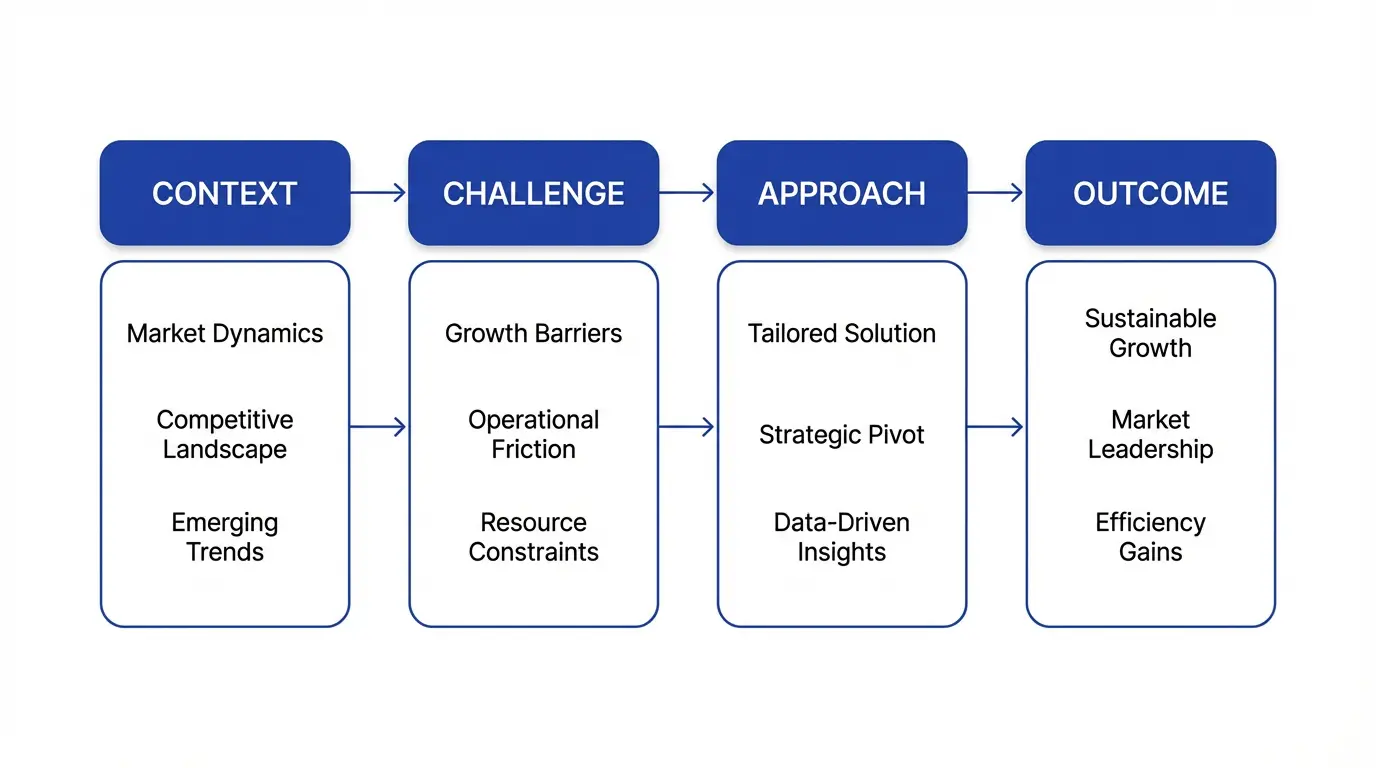
Context defines the client who the client was, using terms that will enable prospects to judge similarity. The size of the company, the level of its growth, occupation on the market, and the business model are relevant to prospects assessing the applicability of this example to them.
Challenge The particular problem is defined in industry-specific terms. The challenge section can cover: the issues with their self-service onboarding is that it is turning 12 percent of trial signups into paid accounts, which is far less than the 25 percent average in their industry.
Approach not only defines what has been made but why certain decisions were taken. This is a sign of skill - knowledge of the problem space further than technical implementation. Prospects desire to understand that the agency considers the strategic thinking about their industry, not only specifications.
Outcome refers to quantifiable outcomes related to the impact of the business. The measures used must be those that the target audience will follow and be interested in. In the case of B2B SaaS it may be conversion of the trial, increased revenue, or time value. In the case of e-commerce, it could be the cart completion rate, average order value or the percentage of returning customers.

Only three or five good niche case studies are normally needed by the agencies to add credibility. It is not about full coverage of all historic work - it is the evidence of profound knowledge of the target segment. The de-emphasis or archiving of generic case studies that are not part of the niche should be done.
For related context, review strategic sales focus.
Aligning Lead Generation With Niche Positioning
Repositioning reverses what lead generation is supposed to achieve. The objective changes to maximizing total to maximizing qualified leads of the target segment. This implies that it must be willing to take the lesser volume in order to realize enormous conversion rates.
Content strategy for niche positioning requires genuine expertise and willingness to share it. Generic development content Generic development covers, framework comparisons, beginner tutorials, appeal to generic audiences. Niche content deals with certain issues that the target market is going through, in their own words and considering their limitations.
Successful niche content can be in a number of forms:
In-depth study of industry-related issues, not only what the issue is, but why it is and which methods are effective. This content creates market leadership and draws the prospects who are actively seeking solutions.
Dissection and evaluations of accessible products or methodologies in the target market. The content is an indicator of knowledge of the competitive world and the skills to critically evaluate solutions.
Articles that are centered on the outcome and explain how certain results were realized to the clients in the niche. These give evidence of what could be done in addition to educating potential about what can be done.
The linking factor is specificity. Each content delivered must resonate with the target audience and at first sight, be viewed to imply that it is addressing the circumstances of the audience. The other industry prospects may find the content interesting, but they should also understand that the writing was not directed to them.
Positioning is ever changing in outbound prospecting. Rather than introducing oneself in a generic way, inquiring whether the potential requires development assistance, outreach may refer to certain issues in their industry, provide relevant case studies, and provide niche-specific benefit in the initial message.
Building Ecosystem Relationships
Clear niche positioning enables intentional partnership development. By making sure that other people in the ecosystem are aware of whom an agency serves, other people can make reliable referrals. In case of a loose positioning, potential partners are not aware of when and whether they should recommend the agency.
Natural referral partners are complementary service providers. A B2B SaaS-oriented development agency could establish contacts with fractional sales leadership firms, product marketing agencies, and customer success platforms serving the same group. Each of the parties faces clients that require services offered by the other party.
Events and communities in industries are made efficient networking locations. Niche-oriented agencies need not spend their time in generic technology conferences hoping to find some relevant prospects, instead, they can dedicate some money in the communities where their target audience convene. The speaking, the sponsorships, the contribution of the content, all these become more effective once they are pooled at the suitable locations.
Tool and platform alliances generate a win-win. Platforms targeting the niche usually require implementation partners to have their customers succeed. Having established an expertise in the ecosystem of a specific platform yields platform-generated qualified referrals.
Such relationships in an ecosystem are built up but accumulated over time. Successful referral enhances the relationship and helps in growth of referral flow in future. The reputation of the agency in the niche develops in a variety of channels at the same time.
Important
Clear niche positioning transforms partnership development from random networking into strategic relationship building. When others in the ecosystem know exactly whom an agency serves, they can make confident referrals. Complementary service providers, industry communities, and platform partnerships all become more valuable when focused on a specific segment. These relationships compound over time, creating referral flows that generalist agencies cannot replicate.
Transform Your Agency Positioning
Discover how niche specialization can create predictable pipeline and premium pricing for your development agency.
Get Positioning StrategyStandardizing Delivery for Efficiency
The standardization made possible by specialization cannot be done through the generalist positioning. When the same problems keep on recurring, trends come into being that can be codified. This standardization improves margins, delivery speed, and quality — benefits that further reinforce the niche positioning.
The niche-specific discovery structures help the project start faster. Discovery is structured rather than the open-ended exploration of the unknown territory and it is used to answer the specific questions that apply to that segment. Teams understand what to enquire, clients feel listened to and projects begin with clearer bases.
The implementation time is minimized as a result of reusable components and patterns. With repeated construction of similar solutions by an agency, technical elements may be isolated and refined. Effective UX patterns that suit the target audience are not new design problems but already existing and accepted standards.
The models of engagement are made more tangible. Rather than scoping out all possible projects, the agencies are able to outline common engagement frameworks that the prospect can identify as pertinent to their circumstances. This is more efficient in the sales process and allows the prospect to know the working together scenario with one another.
The profitability of the standardization is enhanced as the efficiency of the standardization also leads to better outcomes of clients. Projects have the advantage of experience and do not begin anew. Teams work better and provide better quality of work since they are not experimenting but building on previous methods.
| Delivery Element | Generalist Approach | Niche Approach |
|---|---|---|
| Discovery | Open-ended, varies by project | Structured framework for segment |
| Technical Foundation | Selected per project | Proven stack for segment needs |
| UX Patterns | Designed from scratch | Adapted from segment best practices |
| Engagement Structure | Fully custom | Standardized models with customization |
Measuring Niche Performance
Measurement changes are necessary in positioning changes. Such generic measures as overall leads and traffic on the websites do not reflect the effectiveness of the niche strategy. Specialization actually has an impact, which is determined by segment-specific measures.
The quality of the leads must differentiate between niche and non niche leads. What is the proportion of incoming leads of the target profile? What is the change in this percentage with time as positioning efforts become open to time? Is the mechanism that is attracting the right prospects or is it giving off-target volume?
The conversion metrics need to be monitored both in the case of niche and non-niche opportunities. On-niche deals tend to improve on close rates, length of sales cycle, and the size of the average deal. Recording this improvement gives justification to the positioning strategy and reasons to reject off-niche opportunities.
Long-term value can be discovered in retention and expansion metrics. Niche clients that consider the agency to be a specialist partner normally have longer relationships and engagement increases with time. The specialization of customer lifetime value by segment illustrates the returns to scale.
Referral tracking indicates progress of development in the ecosystem. How many new opportunities are derived due to referral in the niche ecosystem? What types of relationships in partnership produce the most qualified introductions? Such information informs further investment in relationship building.
Such measures are to be discussed periodically and help to improve the positioning strategy. In the event that some channels are not yielding the right leads to the niche, the investment need to change. In case some of the messaging can be more appealing to the target audience, it must be increased.
The Transition Period
Shifting from generalist to niche positioning doesn't happen overnight. It takes time and dedication during the transition as new positioning assets are produced and new pipeline sources come into being.
In a transition, you will usually have the agencies retain some off-niche work just to keep the revenue flowing whilst developing niche-based pipeline. This is real world, not a positioning failure. The trick is to make sure that new business development work revolves around the niche and the current commitments are reduced naturally.
The timeline varies based on starting position and market conditions, but agencies should expect six to twelve months before niche positioning generates consistent pipeline. At this stage, content, case study development and ecosystem relationships are accumulated. The payoff is at a point where these assets get to a critical mass and start earning qualified inbound interest.
It is important at this change to be psychologically committed. The challenge of quitting focus on niche in favor of appealing off-niche opportunities is a temptation that kills the whole strategy. Every off-niche undertaken project postpones transition and dilutes the positioning message. Transition period discipline is the key to success of the specialization process.
From Vendor to Partner
The ultimate outcome of successful niche positioning is transformation from vendor to partner. Vendors are competing through price and availability. Spouses are selected on knowledge and relied upon to give strategic advice.
The change in the core economics of the agency business occurs due to this transformation. Partner relationships are priced premiumly due to the awareness of the clients on specialization as opposed to commodity hours. The agency is more likely to have a lasting relationship with the partners since in this case the costs of switching partners go higher when the agency is the one that actually knows the industry of the client. Referrals are natural since the clients desire their friends to gain the same knowledge.
Niche positioning produces compound effects that accelerate over time. A case study library is added with each successful project. Every content generates search authority. All the ecosystem relationships bring about continuous referral. The individual performance of each member of the team enhances better knowledge that generates better delivery.
The discovery conversations become different in instances where prospects are pre-educated on a niche expertise. Conversations begin on strategic levels as opposed to setting basic credibility. The sales cycles are reduced due to new customers building trust prior to the initial conversation. The direction of pricing negotiations changes to outcome investment.
The career trajectory of developing into a specialist takes the heart to lose ground and keep it with discipline. The rewards to the risk are; predictable pipeline, premium positioning, sustainable growth and work that builds on previous learning instead of beginning afresh with each project. When agencies make this shift, they no longer have to compete in their ability but instead win in their knowledge.
For foundational background, see sales process.
Introduction
Majority of web development agencies position themselves in the same manner. According to them, they are full service, industry agnostic, and can build anything to any customer. This stance is secure since it leaves everything to chance. It is also the reason why these agencies find it hard to figure out how to deal with unpredictable pipelines, price based competition and prospects who forget what made them different.
What sounds good in theory is the message, we can build anything. In reality, it establishes positioning that merges in the background of all other development shops. Once a prospect has been presented with five proposals, and all five of the agencies identify themselves as competent generalists, the choice falls on price and availability. There is no special one since each person has not presented a point to favor the prospect.
This is a trend that is observable in the service business environment. Agencies sink more resources into improved portfolios, more focused websites, and more aggressive approaches- but the basic issue of positioning does not go away. Any marketing investment generates dwindling returns without any apparent explanation of why a particular kind of buyer would go with them.
The alternative is niche positioning: becoming the obvious choice for a specific segment rather than a reasonable option for everyone. This strategy is counter-intuitive since it implies the rejection of the possible income. It also generates the predictable pipeline and high-end positioning that the generalist agencies have been years in pursuit of without success.
The Real Cost of Generalist Positioning
The hidden costs that come as a result of generalist positioning are accumulative. Such costs are found in marketing effectiveness, sales turnover, delivery complications and team spirit but they seldom feature in financial statements.
When all the messages have to be appealing to all, marketing will be costly. The content that a generalist agency writes is not able to touch on a personal level to any given audience as the content must keep general enough to not turn away potential clients. The outcome is a generic messaging that does not attract the attention of anybody specifically.
The generalist content is competing with thousands of other such articles on generic search terms. The niche contents directly address a particular audience with regard to their particular issues. The generalist content could bring in more overall traffic; the niche content brings about qualified prospects who could identify themselves in the message.
Positioning is a vaguity that increases sales cycles. The prospects do not come with hope that the agency is knowledgeable of their industry or problems. Any discussion begins on a blank slate where the agency is trying to build upon credibility and relevance. Positioning questions which should be answered have to be answered by lengthy discovery processes.
The process of delivery becomes complicated when every endeavor involves a learning process about a new industry, getting to know new stakeholders, and learning to work with new limitations. The teams context-switch among different types of projects, and they do not have the opportunity to gain the necessary knowledge to perform any work efficiently and of high quality. The margins are hurt since reinvention costs are incurred in all projects.
| Generalist Content | Niche Content |
|---|---|
| "Top 10 Web Design Trends for 2026" | "Why Healthcare Portals Fail HIPAA Compliance Audits" |
| "How to Choose a Web Development Partner" | "What B2B SaaS Companies Get Wrong About Pricing Pages" |
| "The Importance of Mobile-First Design" | "E-commerce Checkout Optimization for DTC Brands" |
Key Insight
The hidden costs of generalist positioning rarely appear as line items in financial statements, but they accumulate relentlessly. Marketing becomes expensive because broad messaging resonates with no one specifically. Sales cycles extend because every conversation starts at ground zero. Delivery suffers because teams never develop deep expertise in any domain. These compounding inefficiencies explain why generalist agencies struggle to break through despite continuous investment in improvement efforts.
Identifying the Right Niche
The choice of the niche should not be random. It is aimed at identifying a segment in which the available strengths, previous successes, and the market opportunity coincide. This involves candid examination of previous performance as opposed to dreaming about the nice markets.
Begin with information on projects that have been finalized. What types of clients yielded the highest benefits both to the client and profitability? What projects were closed in less time and involved less negotiation? What were the relationships that produced referrals and repeat business? What work was invigorating instead of exhausting?
This analysis will generally result in patterns. There are specific industries or the types of companies that seem to be the most powerful among the projects. There are better categories of problems than others. There are always stakeholder profiles that result in easier engagements.
Niche selection involves making concessions on the opportunities that will be rejected. This is the psychological impediment that holds most of the agencies to specialization. The fear of losing revenue continues to hold them in the generalist positioning that results in average performance in all the segments.
The thing is that the shrinkage of off-niche work opens capacity to work on-niche that is more likely to convert, fervently deliver and produce better results. The math even doth prefer specialization at the expense of reduced total addressable market.
| Criteria | Why It Matters |
|---|---|
| Proven Success | Past wins demonstrate ability to deliver value |
| Efficient Sales | Faster closes indicate strong fit between offering and need |
| Repeat Patterns | Similar challenges enable standardization |
| Enjoyable Work | Sustainable positioning requires genuine interest |
| Market Size | Sufficient opportunity to support growth goals |
Rebuilding Value Proposition Around the Niche
After identifying a niche, all the aspects of positioning have to be rebuilt. It is to become not servicing this segment, but constructed to serve this segment.
The generalist value proposition would usually look like the following: "We create quality websites and web applications to businesses of any size." This is what can be said about any of a thousand agencies. In it, there is nothing that makes a certain prospect believe that this agency knows their situation.

A niche value proposition is more reads like: "We create and develop conversion-driven web platforms to B2B SaaS enterprises, so they can minimize the friction between trials and paid and maximize expansion revenue." This is an instant message to the right prospects that the agency knows their business model and talks their language. It also sends the bad prospects an instant message that they should not work in this agency, which is exactly the filtering effect that enhances the quality of the pipeline.
The headline value proposition is not the only area of change. All the marketing copy, all the case study descriptions, all the service pages should reflect the niche orientation. The language used changes to more industry-specific terms as opposed to generic technical language. The problems outlined are no longer categorized into general sections such as user experience, but into very specific issues such as compliance documentation workflows or pricing page conversion optimization.
Such a reconstruction is time consuming and disciplined. The positioning work is jeopardized by the temptation to retain generic language as a just in case. Effective niche positioning requires full commitment to speaking exclusively to the target segment, trusting that the right prospects will respond.
Transforming Case Studies Into Niche Proof
Majority of the agencies have case studies distributed all through their websites. There is not much agency that uses case studies tactically as positioning tools that portray niche expertise.
A generalist case study usually outlines what was constructed: technologies, features deployed, schedule accomplished. This fact is demonstration of ability but it does not determine pertinence. A prospect reading generic case studies, needs to devote himself to mentally extrapolating all of this to his own case, which he hardly will take the trouble to do.
A niche case study narrates about a story that a prospect can identify with. It starts with the background regarding the business model of the client, his/her position in the industry, and strategic issues. It explains the difficulties of the language the target audience employs when talking about themselves. It does not give generic technical deliverables but gives results in measurements that the niche is interested in.
Context defines the client who the client was, using terms that will enable prospects to judge similarity. The size of the company, the level of its growth, occupation on the market, and the business model are relevant to prospects assessing the applicability of this example to them.
Challenge The particular problem is defined in industry-specific terms. The challenge section can cover: the issues with their self-service onboarding is that it is turning 12 percent of trial signups into paid accounts, which is far less than the 25 percent average in their industry.
Approach not only defines what has been made but why certain decisions were taken. This is a sign of skill - knowledge of the problem space further than technical implementation. Prospects desire to understand that the agency considers the strategic thinking about their industry, not only specifications.
Outcome refers to quantifiable outcomes related to the impact of the business. The measures used must be those that the target audience will follow and be interested in. In the case of B2B SaaS it may be conversion of the trial, increased revenue, or time value. In the case of e-commerce, it could be the cart completion rate, average order value or the percentage of returning customers.

Only three or five good niche case studies are normally needed by the agencies to add credibility. It is not about full coverage of all historic work - it is the evidence of profound knowledge of the target segment. The de-emphasis or archiving of generic case studies that are not part of the niche should be done.
For related context, review strategic sales focus.
Aligning Lead Generation With Niche Positioning
Repositioning reverses what lead generation is supposed to achieve. The objective changes to maximizing total to maximizing qualified leads of the target segment. This implies that it must be willing to take the lesser volume in order to realize enormous conversion rates.
Content strategy for niche positioning requires genuine expertise and willingness to share it. Generic development content Generic development covers, framework comparisons, beginner tutorials, appeal to generic audiences. Niche content deals with certain issues that the target market is going through, in their own words and considering their limitations.
Successful niche content can be in a number of forms:
In-depth study of industry-related issues, not only what the issue is, but why it is and which methods are effective. This content creates market leadership and draws the prospects who are actively seeking solutions.
Dissection and evaluations of accessible products or methodologies in the target market. The content is an indicator of knowledge of the competitive world and the skills to critically evaluate solutions.
Articles that are centered on the outcome and explain how certain results were realized to the clients in the niche. These give evidence of what could be done in addition to educating potential about what can be done.
The linking factor is specificity. Each content delivered must resonate with the target audience and at first sight, be viewed to imply that it is addressing the circumstances of the audience. The other industry prospects may find the content interesting, but they should also understand that the writing was not directed to them.
Positioning is ever changing in outbound prospecting. Rather than introducing oneself in a generic way, inquiring whether the potential requires development assistance, outreach may refer to certain issues in their industry, provide relevant case studies, and provide niche-specific benefit in the initial message.
Building Ecosystem Relationships
Clear niche positioning enables intentional partnership development. By making sure that other people in the ecosystem are aware of whom an agency serves, other people can make reliable referrals. In case of a loose positioning, potential partners are not aware of when and whether they should recommend the agency.
Natural referral partners are complementary service providers. A B2B SaaS-oriented development agency could establish contacts with fractional sales leadership firms, product marketing agencies, and customer success platforms serving the same group. Each of the parties faces clients that require services offered by the other party.
Events and communities in industries are made efficient networking locations. Niche-oriented agencies need not spend their time in generic technology conferences hoping to find some relevant prospects, instead, they can dedicate some money in the communities where their target audience convene. The speaking, the sponsorships, the contribution of the content, all these become more effective once they are pooled at the suitable locations.
Tool and platform alliances generate a win-win. Platforms targeting the niche usually require implementation partners to have their customers succeed. Having established an expertise in the ecosystem of a specific platform yields platform-generated qualified referrals.
Such relationships in an ecosystem are built up but accumulated over time. Successful referral enhances the relationship and helps in growth of referral flow in future. The reputation of the agency in the niche develops in a variety of channels at the same time.
Important
Clear niche positioning transforms partnership development from random networking into strategic relationship building. When others in the ecosystem know exactly whom an agency serves, they can make confident referrals. Complementary service providers, industry communities, and platform partnerships all become more valuable when focused on a specific segment. These relationships compound over time, creating referral flows that generalist agencies cannot replicate.
Transform Your Agency Positioning
Discover how niche specialization can create predictable pipeline and premium pricing for your development agency.
Get Positioning StrategyStandardizing Delivery for Efficiency
The standardization made possible by specialization cannot be done through the generalist positioning. When the same problems keep on recurring, trends come into being that can be codified. This standardization improves margins, delivery speed, and quality — benefits that further reinforce the niche positioning.
The niche-specific discovery structures help the project start faster. Discovery is structured rather than the open-ended exploration of the unknown territory and it is used to answer the specific questions that apply to that segment. Teams understand what to enquire, clients feel listened to and projects begin with clearer bases.
The implementation time is minimized as a result of reusable components and patterns. With repeated construction of similar solutions by an agency, technical elements may be isolated and refined. Effective UX patterns that suit the target audience are not new design problems but already existing and accepted standards.
The models of engagement are made more tangible. Rather than scoping out all possible projects, the agencies are able to outline common engagement frameworks that the prospect can identify as pertinent to their circumstances. This is more efficient in the sales process and allows the prospect to know the working together scenario with one another.
The profitability of the standardization is enhanced as the efficiency of the standardization also leads to better outcomes of clients. Projects have the advantage of experience and do not begin anew. Teams work better and provide better quality of work since they are not experimenting but building on previous methods.
| Delivery Element | Generalist Approach | Niche Approach |
|---|---|---|
| Discovery | Open-ended, varies by project | Structured framework for segment |
| Technical Foundation | Selected per project | Proven stack for segment needs |
| UX Patterns | Designed from scratch | Adapted from segment best practices |
| Engagement Structure | Fully custom | Standardized models with customization |
Measuring Niche Performance
Measurement changes are necessary in positioning changes. Such generic measures as overall leads and traffic on the websites do not reflect the effectiveness of the niche strategy. Specialization actually has an impact, which is determined by segment-specific measures.
The quality of the leads must differentiate between niche and non niche leads. What is the proportion of incoming leads of the target profile? What is the change in this percentage with time as positioning efforts become open to time? Is the mechanism that is attracting the right prospects or is it giving off-target volume?
The conversion metrics need to be monitored both in the case of niche and non-niche opportunities. On-niche deals tend to improve on close rates, length of sales cycle, and the size of the average deal. Recording this improvement gives justification to the positioning strategy and reasons to reject off-niche opportunities.
Long-term value can be discovered in retention and expansion metrics. Niche clients that consider the agency to be a specialist partner normally have longer relationships and engagement increases with time. The specialization of customer lifetime value by segment illustrates the returns to scale.
Referral tracking indicates progress of development in the ecosystem. How many new opportunities are derived due to referral in the niche ecosystem? What types of relationships in partnership produce the most qualified introductions? Such information informs further investment in relationship building.
Such measures are to be discussed periodically and help to improve the positioning strategy. In the event that some channels are not yielding the right leads to the niche, the investment need to change. In case some of the messaging can be more appealing to the target audience, it must be increased.
The Transition Period
Shifting from generalist to niche positioning doesn't happen overnight. It takes time and dedication during the transition as new positioning assets are produced and new pipeline sources come into being.
In a transition, you will usually have the agencies retain some off-niche work just to keep the revenue flowing whilst developing niche-based pipeline. This is real world, not a positioning failure. The trick is to make sure that new business development work revolves around the niche and the current commitments are reduced naturally.
The timeline varies based on starting position and market conditions, but agencies should expect six to twelve months before niche positioning generates consistent pipeline. At this stage, content, case study development and ecosystem relationships are accumulated. The payoff is at a point where these assets get to a critical mass and start earning qualified inbound interest.
It is important at this change to be psychologically committed. The challenge of quitting focus on niche in favor of appealing off-niche opportunities is a temptation that kills the whole strategy. Every off-niche undertaken project postpones transition and dilutes the positioning message. Transition period discipline is the key to success of the specialization process.
From Vendor to Partner
The ultimate outcome of successful niche positioning is transformation from vendor to partner. Vendors are competing through price and availability. Spouses are selected on knowledge and relied upon to give strategic advice.
The change in the core economics of the agency business occurs due to this transformation. Partner relationships are priced premiumly due to the awareness of the clients on specialization as opposed to commodity hours. The agency is more likely to have a lasting relationship with the partners since in this case the costs of switching partners go higher when the agency is the one that actually knows the industry of the client. Referrals are natural since the clients desire their friends to gain the same knowledge.
Niche positioning produces compound effects that accelerate over time. A case study library is added with each successful project. Every content generates search authority. All the ecosystem relationships bring about continuous referral. The individual performance of each member of the team enhances better knowledge that generates better delivery.
The discovery conversations become different in instances where prospects are pre-educated on a niche expertise. Conversations begin on strategic levels as opposed to setting basic credibility. The sales cycles are reduced due to new customers building trust prior to the initial conversation. The direction of pricing negotiations changes to outcome investment.
The career trajectory of developing into a specialist takes the heart to lose ground and keep it with discipline. The rewards to the risk are; predictable pipeline, premium positioning, sustainable growth and work that builds on previous learning instead of beginning afresh with each project. When agencies make this shift, they no longer have to compete in their ability but instead win in their knowledge.
For foundational background, see sales process.

Table of Content